Everyone experiences stress from time to time, especially in care work.
Stress is the body’s physical and psychological reaction to situations that are perceived as challenging, demanding, or threatening.
It activates natural survival mechanisms that help us respond to pressure, focus attention, and react quickly when needed.
Sometimes stress appears suddenly, for example when you are running late for work or responding to an urgent situation. This is known as acute stress. It can temporarily increase alertness and energy and usually fades once the situation is over.
However, when stressful situations occur repeatedly and the body does not have enough time to recover, stress can become chronic. Chronic stress builds up gradually and can affect both physical and mental health. Over time, unresolved stress can increase the risk of burnout, sickness absence, and early exit from the care profession.
For healthcare professionals working in care and nursing roles, stress is often caused by a combination of personal and organisational factors.
Personal factors may include emotional involvement with patients, high sense of responsibility for patient safety, and limited opportunities for emotional recovery during shifts.
Organisational factors in care settings include staff shortages, high patient-to-staff ratios, time pressure, shift work and night shifts, physically demanding tasks such as lifting and repositioning patients, and limited decision-making autonomy.
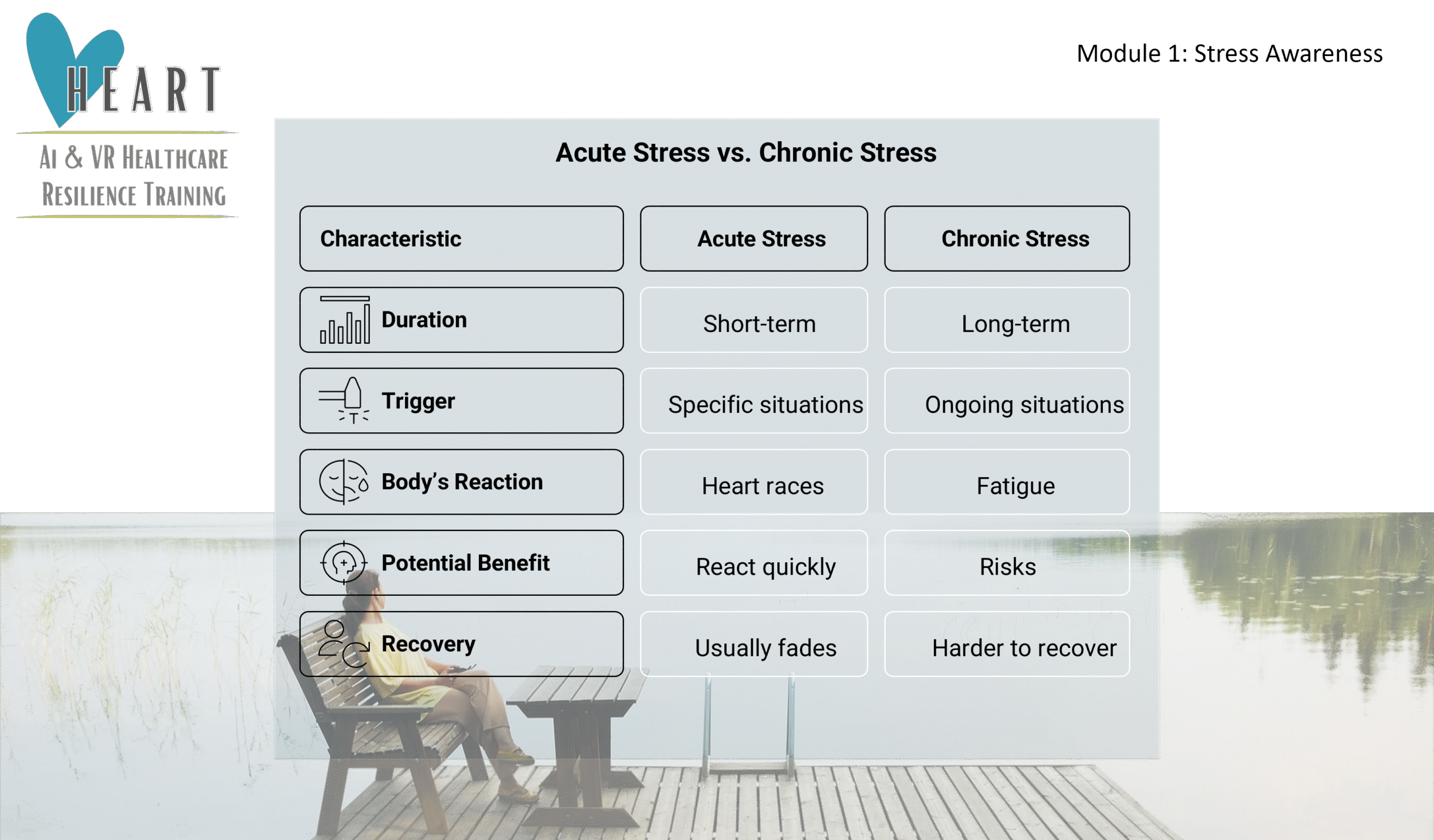
This overview helps you distinguish between acute and chronic stress, which are both common in care work.
Acute stress is a short-term reaction to a specific situation, such as an emergency call or a difficult interaction at work. You might notice a faster heartbeat, tension, or heightened focus. These reactions usually subside once the situation has passed.
Chronic stress, in contrast, develops over weeks or months. It is often linked to ongoing challenges such as staff shortages, constant time pressure, or repeated emotional strain. Chronic stress can lead to ongoing fatigue, sleep problems, headaches, reduced concentration, and a higher risk of burnout.
Being able to recognize whether stress is acute or chronic helps you understand what your body is telling you and signals when support or changes may be needed.
Now that you have a clearer picture of what stress is and how it can affect you, it is useful to briefly look at general ways people can support their well-being in stressful situations.
The strategies below are not a full training, but an introduction. You will explore these approaches in more depth in later modules focused on mindfulness, resilience, and recovery.
Having a regular daily structure can help create a sense of stability and control. Planning time for meals, rest, work, physical activity, and personal life can reduce unnecessary stress.
Sleep is essential for physical and mental recovery. Good sleep supports emotional balance and helps the body cope better with stress.
Healthy sleep habits include:
Talking with trusted family members, friends, or colleagues can help reduce emotional pressure. Social connection is an important protective factor against stress.
Regular meals and a balanced diet support energy levels and overall health. Drinking enough fluids and including fruits and vegetables can help the body manage stress more effectively.
Regular physical activity—such as walking, stretching, or exercise—can reduce tension and improve mood.
Constant exposure to news and social media can increase stress levels. Reducing consumption may help you feel calmer and more focused.
References
World Health Organization. (2023). Stress. https://www.who.int/news-room/questions-and-answers/item/stress
National Institute of Mental Health. (n.d.). 5 things you should know about stress. https://www.nimh.nih.gov/health/publications/stress/index.shtml