Burnout is a serious challenge in care work. It’s more than just feeling tired: it’s a long-lasting response to ongoing stress on the job.
Experts describe burnout as a mix of three things: feeling emotionally drained, growing distant or negative about your work, and noticing a drop in your motivation or performance.
Symptoms can include constant fatigue, irritability, feeling detached from your work or patients, and not caring as much as you used to. Burnout often develops when you’re facing high demands, working long or irregular shifts, or feel you have little control or support.
Knowing the early warning signs is key. If you recognize them in yourself or a colleague, it’s time to pay attention and reach out for help.
Burnout can affect anyone working in care, sometimes without us realizing it’s happening. Maslach’s model highlights three areas to watch for: not just physical tiredness, but also changes in your mindset and how you feel about your work. As you look at this infographic, think about whether you’ve experienced any of these symptoms. Early recognition makes it easier to get support and protect your wellbeing.
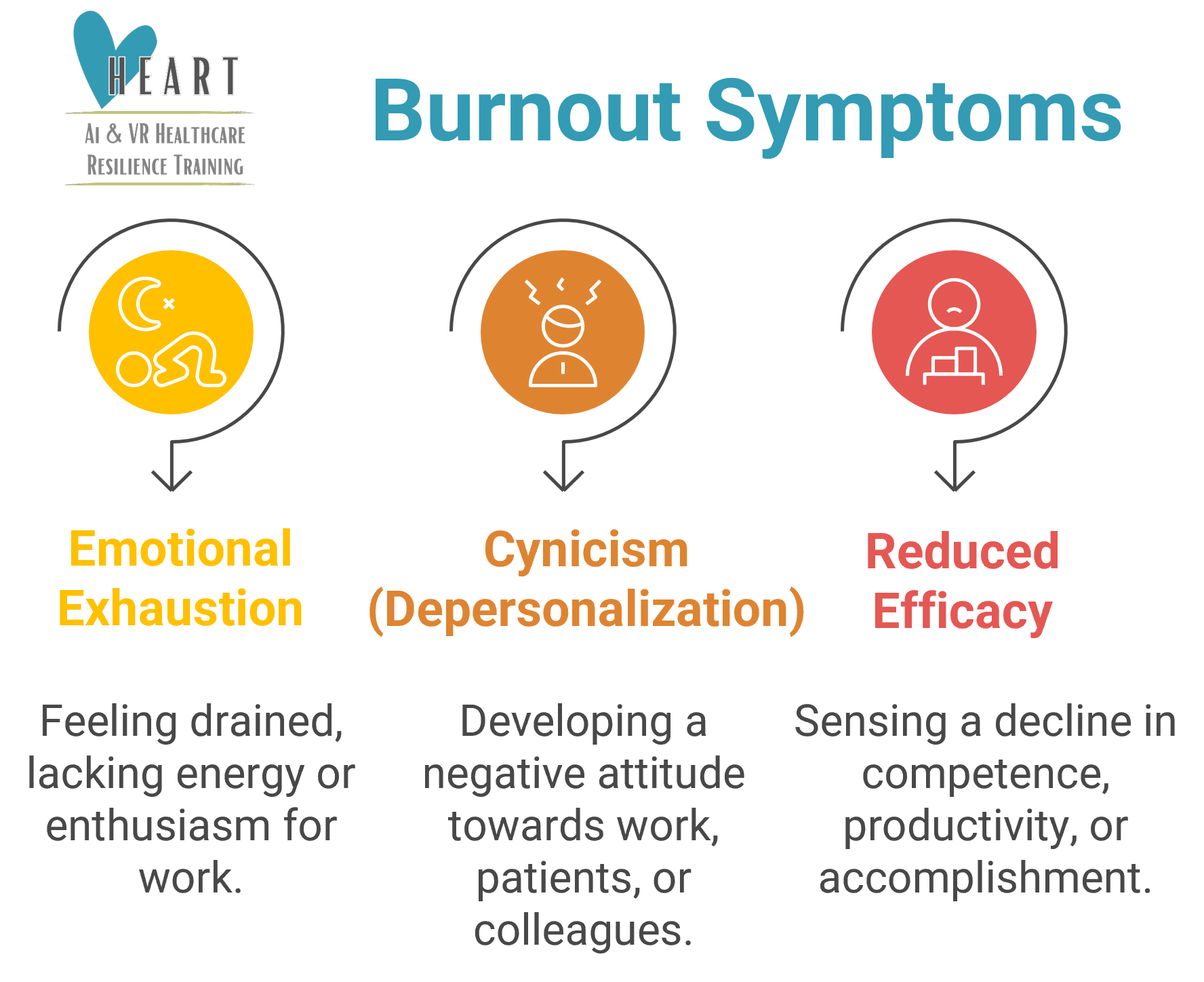
Burnout in care work often shows up as emotional exhaustion, feeling “so tired after every shift, I have nothing left to give.” It can include cynicism thinking, “I just don’t care as much anymore” or “I feel disconnected from my patients.” Finally, reduced efficacy might sound like, “I don’t feel I’m making a difference” or “I can’t do my job as well as before.”
Take a moment to reflect: Have you noticed any of these signs in yourself or a colleague? If so, it’s important to reach out, talk about it, and take steps to protect your health.
References
Maslach, C., & Leiter, M. P. (2016). Understanding the burnout experience: Recent research and its implications for psychiatry. World Psychiatry, 15(2), 103–111. https://doi.org/10.1002/wps.20311
World Health Organization. (2019, May 28). Burn‑out: an “occupational phenomenon.”
Burn-out an “occupational phenomenon”: International Classification of Diseases