
Mindfulness grows through practice: not by thinking about it, but by experiencing it.
Every calm moment you create strengthens your ability to stay steady, even in stressful situations.
In this lesson, you’ll explore three core mindfulness practices that are easy to use in everyday life, even during a busy shift:
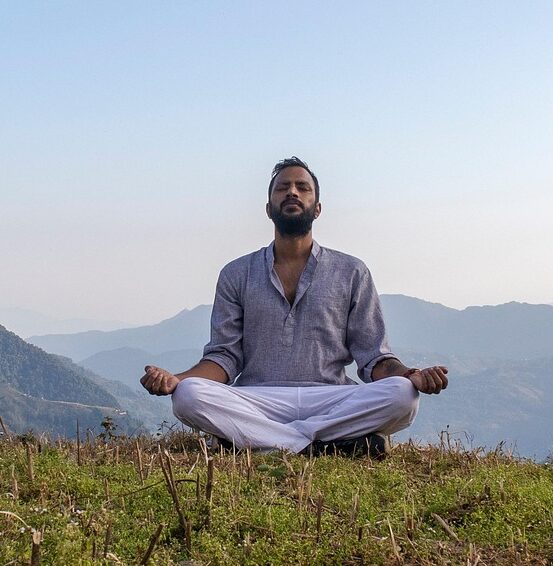
You don’t need a quiet room or extra time, just curiosity and a few mindful breaths.
These small practices are designed for real life: before a shift, between tasks, or after a challenging moment.
Take a breath, and let’s begin with the simplest tool you already have: your breathing.
(Inspired by structured breathing techniques such as Box Breathing and the 4–7–8 method)
Your breath is always with you: quiet, steady, and endlessly patient.
It is one of the most effective ways to calm the nervous system and reconnect with yourself during a busy day.
This practice is inspired by simple structured breathing techniques often used for stress regulation, such as Box Breathing or the 4–7–8 method. You don’t need to follow a fixed rhythm: the focus is on awareness, not performance.
Try this short practice:
1️⃣ Pause.
Sit or stand comfortably. Let your shoulders drop.
2️⃣ Notice.
Without changing anything, feel one full breath — air moving in, air moving out.
3️⃣ Anchor.
As you breathe in, silently think “Here.”
As you breathe out, silently think “Now.”
4️⃣ Continue for three breaths.
If your mind wanders, that’s normal. Each time you notice, gently bring it back to your next breath.

(Gentle Full-Body Scan)
Your body often knows how you feel before your mind does.
It carries tension, fatigue, or calm, long before you find the words for it.
This practice is a gentle form of a full-body scan. It helps you notice sensations, tension, and support throughout your body, without needing to lie down or close your eyes.
Try this short grounding practice:
1️⃣ Pause and Feel.
Notice your posture. Are your shoulders lifted? Is your jaw tight? Are your feet touching the ground?
2️⃣ Breathe into Awareness.
Take one slow breath and imagine sending that breath toward the area that feels most tense.
You don’t have to change it, just notice it.
3️⃣ Sense the Whole Body.
Widen your attention. Feel the weight of your body on the chair or your feet on the floor.
Notice how the ground or surface supports you.
4️⃣ Reconnect.
As you exhale, quietly say to yourself: “I’m here.”
This is mindfulness in motion — not escaping the body, but returning to it with gentleness.
Your attention is like a beam of light, it can scatter in many directions or gently rest on one thing at a time.
Mindfulness helps you guide that light with ease instead of force.
This practice supports mindfulness in everyday activities, such as mindful walking, mindful eating, or mindful hand movements during routine tasks.
1️⃣ Choose your focus.
Select something simple: your breath, the feeling of your feet on the ground, or a quiet sound around you.
2️⃣ Stay for a few breaths.
Let your attention rest there softly, without effort.
3️⃣ Notice distraction.
When your mind wanders, gently label it: “thinking,” “planning,” or “remembering.”
4️⃣ Return kindly.
Bring your attention back without judgment. Each return is a small act of patience and strength.
This practice can be used while:
Next, you’ll learn how to bring mindfulness into real-life care situations: turning short pauses into steady support throughout your day.